
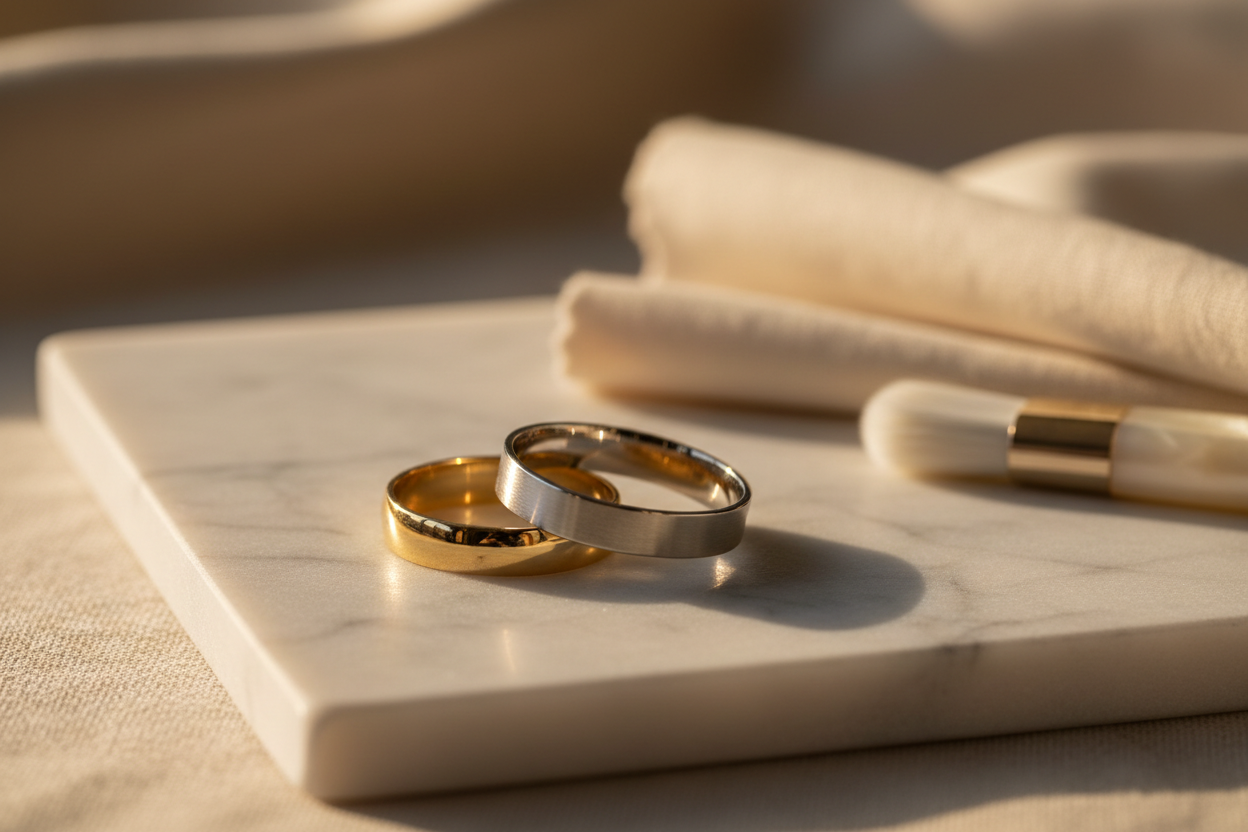
Wedding bands represent a significant financial and emotional investment. Over time, exposure to environmental factors and daily wear can diminish the reflective properties of precious metals and the brilliance of gemstones, requiring systematic maintenance to preserve their structural integrity and aesthetic value.

Implementing a professional care regimen ensures these jewelry pieces remain in optimal condition. This guide outlines the technical requirements for routine preservation, material-specific care, and the necessity of periodic professional evaluations.
The Art of Routine Preservation
Environmental contaminants such as lotions, soaps, and skin oils accumulate on jewelry surfaces, obstructing light reflection and dulling the appearance of both metals and gemstones. Regular home cleaning is required to mitigate this buildup and maintain the aesthetic quality of the bands.
Submerging rings in a solution of warm water and mild, fragrance-free detergent effectively removes surface debris. This non-abrasive approach prevents chemical damage to the metal and ensures the security of the settings while restoring surface clarity.
Caring for Gold Rings and Precious Metals
Whether you possess a classic yellow gold band or a modern rose gold piece, caring for gold rings involves a delicate balance of protection and cleaning. Gold is a relatively soft metal, making it susceptible to microscopic scratches that can eventually lead to a matte appearance if not handled with care.
For white gold, it is essential to remember that the brilliant silver-white finish is typically achieved through rhodium plating. Over years of wear, this plating may naturally thin, requiring professional jewelry maintenance to restore its signature brightness. Platinum, while denser and more durable, develops a natural patina over time that some admire, though it can be polished back to a high shine by a master jeweler.
Diamond Care and Professional Maintenance
To maintain the fire and brilliance of diamonds and pavé-set gemstones, regular cleaning is essential as they easily attract oils that dull their refractive index. A soft-bristled toothbrush used with minimal pressure can effectively navigate the intricate spaces beneath the stones where debris accumulates. Regular home inspections are vital; if a stone feels loose or a prong appears snagged, immediate expert evaluation is required to ensure the security of the setting.
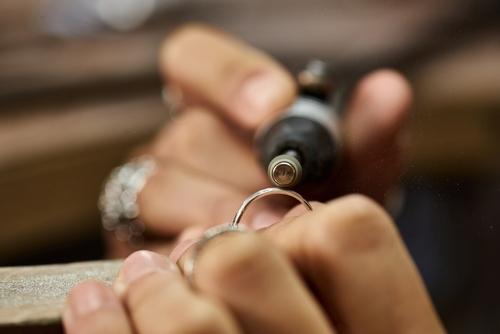
While home care is fundamental, professional maintenance at least twice a year is necessary to address crevices inaccessible by hand. Master craftsmen utilize ultrasonic cleaning, high-pressure steam treatments, and high-magnification inspections to identify structural issues before they lead to stone loss. These visits also allow for light buffing and rhodium replating for white gold, ensuring the metal retains its mirror-like finish and structural integrity for decades.
Protecting Your Investment During Daily Activities
True preservation often comes down to knowing when to remove your jewelry. To preserve wedding ring shine, it is prudent to set your bands aside during activities involving harsh chemicals, such as cleaning with bleach or swimming in chlorinated pools. Chlorine, in particular, can cause stress corrosion cracking in certain gold alloys, leading to irreparable damage.
At Rummele’s, we understand that your wedding jewelry represents a lifetime of memories, and we are dedicated to helping you keep those symbols as bright as the day you said your vows. We invite you to visit our showroom for a complimentary inspection and to explore our bespoke care services tailored to your unique collection.
FAQs
What is the safest way to clean my wedding band at home?
The safest method involves soaking the ring in warm water mixed with mild dish soap and gently cleaning it with a soft-bristle brush. Always rinse thoroughly under running water with the drain closed and pat dry with a lint-free cloth.
How often should I have my wedding band professionally inspected and cleaned?
It is generally recommended to seek professional jewelry maintenance every six months. Regular inspections help ensure that prongs are secure and that the metal remains free of significant structural wear.
What common household products can damage my ring's finish or gemstones?
Harsh chemicals such as bleach and chlorine, as well as abrasive scrubbing agents, can pit gold and damage the surfaces of certain gemstones. Even thick lotions and hairsprays can create a stubborn residue that dulls the metal’s natural radiance.
Are there specific care differences for white gold, yellow gold, and platinum wedding bands?
White gold requires occasional rhodium replating to maintain its color, while yellow gold may need more frequent polishing due to its softness. Platinum is highly durable and does not fade, though it may develop a matte patina that can be professionally polished if desired.
How can I protect my wedding band when engaging in sports or manual labor?
The best protection is to remove your ring and store it in a secure, soft-lined pouch before starting any strenuous activity. This prevents the metal from warping under pressure and protects the stones from potential impact or chipping.